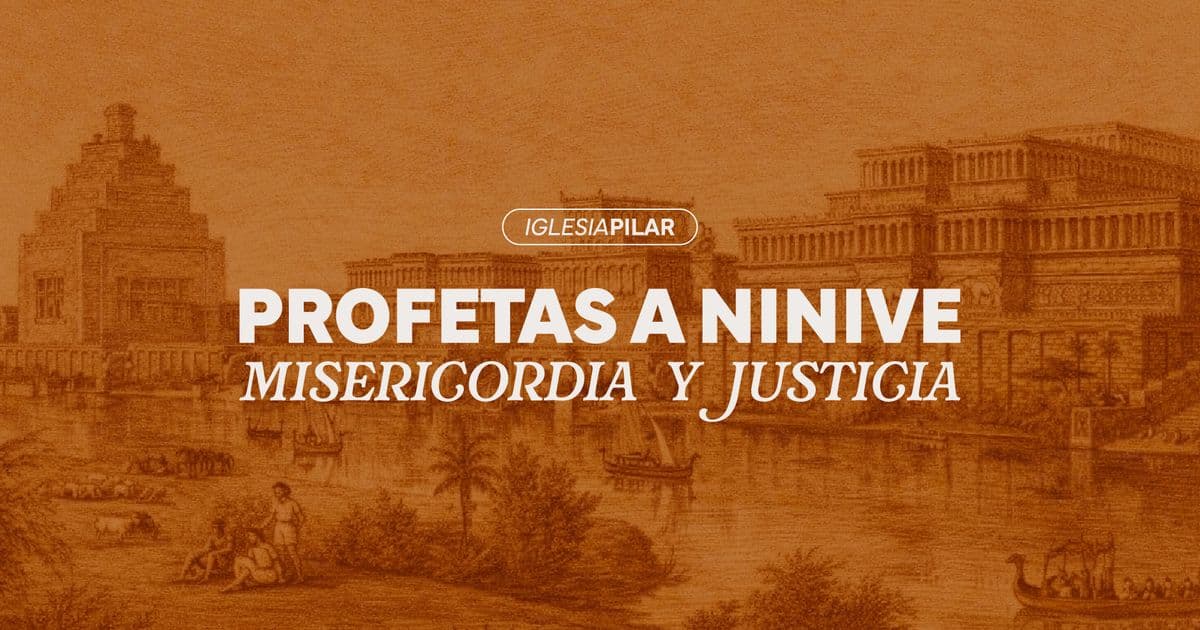


"El Señor destruye a sus enemigos y liberta a su pueblo"
En la Sierra de Santiago, unos cachorros de oso bajaban tranquilamente por una ladera. Para los visitantes, la escena era tierna e inofensiva. Pero los lugareños sabían algo que los demás ignoraban: el verdadero peligro no eran los oseznos, sino mamá oso, que percibe cualquier acercamiento como una amenaza y hará todo por proteger a sus crías. El sentido común lo confirma: meterse con el cachorro es meterse con la madre. Los asirios se metieron con el pueblo de Dios, y en Nahum 1:9–2:2 queda claro que meterse con Judá es meterse con Dios.
En la sección anterior de Nahum (1:1-8), Dios declaró quién es Él: celoso, vengador, irascible y grande en poder. Ahora, el profeta presenta tres pares de conversaciones donde Dios se dirige alternadamente a Nínive con tono de juicio y a Judá con tono de consuelo.
Confía en la destrucción de Dios de sus enemigos y confía en tu libertadNahum 1:9-13
Para Asiria, Judá era probablemente uno más entre tantos pueblos por someter. Las palabras del enviado del rey Senaquerib lo dejan ver: "¿Quién de entre todos los dioses de esta tierra ha librado su tierra de mi mano, para que el Señor libre a Jerusalén de mi mano?" (2 Reyes 18:35). Para los asirios, el Dios de Judá era un dios más entre muchos. Pero Dios toma las tramas contra su pueblo como tramas en su contra. Se lo toma personal: meterse con Judá es meterse con Él.
La destrucción que Nahum describe no deja lugar a dudas. En el verso 9, destrucción completa. En el 10, consumidos totalmente. En el 12, cortados hasta desaparecer. En el 14, su nombre no se perpetuará y serán sepultados. En el 15, nunca más volverán y su exterminio será por completo. La paciencia del Señor se había agotado y su juicio sería ejecutado sin ambigüedades.
La historia confirma esta profecía al pie de la letra. Nínive fue destruida en el 612 a.C. por una coalición de medos y babilonios, y nunca más fue reedificada. Ningún imperio regresó a sus ruinas para levantar la ciudad. Sus restos apenas fueron descubiertos en 1845, donde aún se realizan esfuerzos arqueológicos. Los asirios, con todo su vigor, su ejército numeroso y sus estrategias, fueron consumidos como paja seca. Esto incluía al imperio y a sus líderes, como aquel consejero perverso que tramó el mal contra el Señor. La identidad de este consejero no se revela en el texto, pero su destino es el mismo: ser cortado y desaparecer.
El texto también revela algo importante para Judá. Dios reconoce que usó al imperio asirio para disciplinar a su pueblo. Judá había incumplido el pacto, y como Moisés advirtió: "Por cuanto no serviste al Señor tu Dios con alegría y con gozo de corazón cuando tenías la abundancia de todas las cosas, por tanto servirás a tus enemigos los cuales el Señor enviará contra ti" (Deuteronomio 28:47-48). Dios usó a los asirios como instrumento de disciplina, pero ahora declara: "Aunque te haya afligido, Judá, no te afligiré más." El yugo sería quitado y el dominio asirio terminaría. La disciplina de Dios sobre Judá se había acabado.
Es fácil pensar que los enemigos son personas o circunstancias visibles: un jefe difícil, un sistema injusto, alguien que hostiga. Pero la lucha verdadera no es contra carne ni sangre. Los enemigos reales del pueblo de Dios son tres: el pecado, la muerte y Satanás. Sus asedios no solo afectan el presente, sino que buscan la destrucción eterna.
El pecado —rebeldía contra el Señor que entró al ser humano cuando Adán y Eva decidieron hacer las cosas a su manera— tiene consecuencias serias: "Porque la paga del pecado es muerte, pero la dádiva de Dios es vida eterna en Cristo Jesús Señor nuestro" (Romanos 6:23). Cristo pagó en la cruz esas consecuencias. El pecado ya no tiene dominio sobre los que confían en Él.
La muerte, consecuencia directa del pecado, también ha sido enfrentada: "Por la aparición de nuestro Señor Jesucristo, quien puso fin a la muerte" (2 Timoteo 1:10). La muerte eterna ha sido vencida por la resurrección de Cristo, y la muerte física será derrotada cuando los creyentes resuciten como Él resucitó: "Y la muerte y el Hades fueron arrojados al lago de fuego" (Apocalipsis 20:14).
Satanás, el tercer enemigo, también ha sido derrotado: "Para anular mediante la muerte el poder de aquel que tenía el poder de la muerte, es decir, al diablo" (Hebreos 2:14). Jesús despojó a los poderes y autoridades espirituales, haciendo de ellos un espectáculo público y triunfando sobre ellos. Esta destrucción ya inició y será completada cuando Cristo regrese. Así como Judá podía confiar en la palabra de Dios a través de Nahum, cada creyente puede confiar en que ya no hay yugo del pecado, de la muerte ni de Satanás. Cristo en su vida, muerte y resurrección ha dado la estocada fatal a estos enemigos, y con su segunda venida los derrotará por completo.
Celebra la destrucción de los enemigos de Dios y celebra tu libertadNahum 1:14-15
La profecía se dirige nuevamente a Nínive con una orden certera del Señor: el nombre del imperio no se perpetuará, sus templos y dioses serán arrasados, y Dios mismo prepara su sepultura "porque eres vil." El peso de estas palabras es enorme: Dios le dice al imperio más poderoso de su tiempo que Él está cavando su tumba. Históricamente, Dios usó a los medos y babilonios para ejecutar este juicio. No fueron ellos quienes sepultaron a Nínive; fue Dios quien preparó su sepultura.
Luego, el profeta se vuelve hacia Judá con una imagen gloriosa: "Miren, sobre los montes andan los pies del que trae buenas nuevas, del que anuncia la paz." Como un heraldo que regresa corriendo desde el campo de batalla, alguien viene sobre los montes proclamando que los enemigos han sido derrotados, que la tiranía de Asiria terminó y que ahora hay paz.
Pero esta libertad tiene un propósito: "Celebra tus fiestas, Judá, cumple tus votos." El pueblo, libre del temor a los asirios, podía adorar a Dios sin reservas. La libertad del Señor existe para que su pueblo le adore plenamente.
Del mismo modo, quienes han sido libertados por el evangelio no fueron rescatados para vivir una vida pasiva o indiferente. Pablo lo expresa así: "De la manera que ustedes presentaron sus miembros como esclavos a la impureza y a la iniquidad, así ahora presenten sus miembros como esclavos a la justicia para santificación" (Romanos 6:19). Vivir para la gloria de Dios implica responder en obediencia gozosa: compartir el evangelio, participar de un proceso de discipulado comprometiéndose con una comunidad que desea crecer a la imagen de Cristo, y congregarse semanalmente para proclamar quién es Dios, lo que Él ha dicho y lo que Él ha hecho. Así como Judá demostraba ser el pueblo de Dios al celebrar sus fiestas, la iglesia demuestra ser su pueblo al reunirse para adorar.
Anticipa la destrucción de los enemigos de Dios y la futura gloria de su puebloNahum 2:1-2
El profeta se dirige una última vez a Nínive: "El destructor ha subido contra ti, monta guardia en la fortaleza, vigila el camino, fortalece tus lomos, refuerza más tu poder." Las palabras llevan un tono irónico, casi de burla. Es como decirle al enemigo: ahí viene el destructor, prepárate, échale ganas. Pero la ironía está en que nada de eso servirá. Aunque monte guardia, vigile los caminos y refuerce su poderío, Nínive será aniquilada.
Y entonces viene la promesa para Judá: "Porque el Señor restaurará la gloria de Jacob." El Salmo 47 ilumina esta gloria: el pueblo de Dios en la heredad que Él le dio, y Dios reinando sobre las naciones: "Canten alabanzas a Dios, canten alabanzas. Canten alabanzas a nuestro Rey, canten alabanzas. Porque Dios es Rey de toda la tierra. Dios reina sobre las naciones, sentado está Dios en su santo trono" (Salmo 47:6-8).
No importa cuánto ruja el enemigo ni qué tan potente e invencible se vea. La muerte, el pecado y Satanás serán derrotados por completo. Juan le escribe a la iglesia en Apocalipsis acerca de estos enemigos que parecen grandes, fuertes e invencibles, pero también escribe de uno más grande, más fuerte y realmente invencible: Jesús, quien los pondrá debajo de sus pies. Los días de estos enemigos están contados. Una manera de anticipar ese día es orando: Señor, haz tu obra, ven pronto. Y la otra es mantener la expectativa de la restauración de la gloria de su pueblo, cuando la nueva ciudad de Dios sea el centro de su alabanza eterna.
Conclusión
En el reino animal se espera que una madre proteja a sus crías a toda costa. Hace poco se viralizó la historia de un pequeño mono llamado Punch en un zoológico de Japón: cada vez que se acercaba a su madre, esta lo rechazaba y lo alejaba. Quien debía protegerlo del peligro lo estaba abandonando. Pero el pueblo de Dios no será como Punch. Como su pueblo, somos protegidos por un Dios que ha destruido a nuestros enemigos y nos ha libertado.
Si aún no se ha puesto la confianza en Cristo, el pecado, la muerte y Satanás asediarán no solo en este tiempo, sino por la eternidad. El único que puede rescatar de estos enemigos es Dios mismo, y la manera de cobijarse bajo su salvación es creyendo en Jesús y arrepintiéndose del pecado.
El Señor destruye a sus enemigos y liberta a su pueblo. Confía en esa destrucción, celebra tu libertad y anticipa aquel día donde la gloria de su pueblo será restaurada.
Transcripción completa
God Fights for the Freedom of His People
"The Lord destroys his enemies and sets his people free" In the Sierra de Santiago mountains, some bear cubs were calmly making their way down a hillside. For the visitors, the scene was tender and harmless. But the locals knew something the others did not: the real danger was not the cubs, but mama bear, who perceives any approach as a threat and will do anything to protect her young. Common sense confirms it: mess with the cub and you mess with the mother. The Assyrians messed with God's people, and in Nahum 1:9–2:2 it becomes clear that to mess with Judah is to mess with God. In the previous section of Nahum (1:1-8), God declared who He is: jealous, avenging, wrathful, and great in power. Now the prophet presents three pairs of conversations where God alternately addresses Nineveh with a tone of judgment and Judah with a tone of comfort. Trust in God's Destruction of His Enemies and Trust in Your Freedom (Nahum 1:9-13) For Assyria, Judah was likely just one more nation among many to subdue. The words of King Sennacherib's envoy make this clear: "Who among all the gods of these lands have delivered their land from my hand, that the Lord should deliver Jerusalem from my hand?" (2 Kings 18:35). For the Assyrians, Judah's God was just another god among many. But God takes the schemes against His people as schemes against Himself. He takes it personally: to mess with Judah is to mess with Him. The destruction Nahum describes leaves no room for doubt. In verse 9, complete destruction. In verse 10, totally consumed. In verse 12, cut off until they disappear. In verse 14, their name will not be perpetuated and they will be buried. In verse 15, they will never return and their extermination will be complete. The Lord's patience had run out and His judgment would be executed without ambiguity. History confirms this prophecy to the letter. Nineveh was destroyed in 612 B.C. by a coalition of Medes and Babylonians, and it was never rebuilt. No empire returned to its ruins to raise the city again. Its remains were only discovered in 1845, where archaeological efforts continue to this day. The Assyrians, with all their vigor, their numerous army, and their strategies, were consumed like dry chaff. This included the empire and its leaders, like that wicked counselor who plotted evil against the Lord. The identity of this counselor is not revealed in the text, but his fate is the same: to be cut off and disappear. The text also reveals something important for Judah. God acknowledges that He used the Assyrian empire to discipline His people. Judah had broken the covenant, and as Moses warned: "Because you did not serve the Lord your God with joy and a glad heart when you had an abundance of all things, therefore you shall serve your enemies whom the Lord will send against you" (Deuteronomy 28:47-48). God used the Assyrians as an instrument of discipline, but now declares: "Though I have afflicted you, Judah, I will afflict you no more." The yoke would be removed and Assyrian dominion would end. God's discipline over Judah was finished. It is easy to think that enemies are visible people or circumstances: a difficult boss, an unjust system, someone who harasses. But the true struggle is not against flesh and blood. The real enemies of God's people are three: sin, death, and Satan. Their assaults not only affect the present but seek eternal destruction. Sin — rebellion against the Lord that entered humanity when Adam and Eve decided to do things their own way — has serious consequences: "For the wages of sin is death, but the free gift of God is eternal life in Christ Jesus our Lord" (Romans 6:23). Christ paid those consequences on the cross. Sin no longer has dominion over those who trust in Him. Death, a direct consequence of sin, has also been confronted: "By the appearing of our Lord Jesus Christ, who put an end to death" (2 Timothy 1:10). Eternal death has been conquered by Christ's resurrection, and physical death will be defeated when believers are raised as He was raised: "And death and Hades were thrown into the lake of fire" (Revelation 20:14). Satan, the third enemy, has also been defeated: "That through death He might render powerless him who had the power of death, that is, the devil" (Hebrews 2:14). Jesus stripped the spiritual powers and authorities, making a public spectacle of them and triumphing over them. This destruction has already begun and will be completed when Christ returns. Just as Judah could trust in the word of God through Nahum, every believer can trust that there is no longer any yoke of sin, death, or Satan. Christ in His life, death, and resurrection has dealt the fatal blow to these enemies, and with His second coming He will defeat them completely. Celebrate the Destruction of God's Enemies and Celebrate Your Freedom (Nahum 1:14-15) The prophecy turns once again to Nineveh with a decisive order from the Lord: the empire's name will not be perpetuated, its temples and gods will be destroyed, and God Himself prepares its burial "because you are vile." The weight of these words is enormous: God tells the most powerful empire of its time that He is digging its grave. Historically, God used the Medes and Babylonians to execute this judgment. It was not they who buried Nineveh; it was God who prepared its grave. Then the prophet turns to Judah with a glorious image: "Behold, on the mountains the feet of him who brings good news, who announces peace." Like a herald returning from the battlefield, someone comes over the mountains proclaiming that the enemies have been defeated, that Assyria's tyranny is over, and that there is now peace. But this freedom has a purpose: "Celebrate your feasts, Judah, fulfill your vows." The people, free from the fear of the Assyrians, could worship God without reservation. The Lord's freedom exists so that His people may worship Him fully. Likewise, those who have been set free by the gospel were not rescued to live a passive or indifferent life. Paul puts it this way: "For just as you presented your members as slaves to impurity and to lawlessness, so now present your members as slaves to righteousness for sanctification" (Romans 6:19). Living for God's glory means responding in joyful obedience: sharing the gospel, engaging in discipleship by committing to a community that desires to grow in the image of Christ, and gathering weekly to proclaim who God is, what He has said, and what He has done. Just as Judah proved to be God's people by celebrating their feasts, the church proves to be His people by gathering to worship. Anticipate the Destruction of God's Enemies and the Future Glory of His People (Nahum 2:1-2) The prophet addresses Nineveh one last time: "The destroyer has come up against you. Mount guard at the fortress, watch the road, strengthen your loins, summon all your strength." The words carry an ironic, almost mocking tone. It is as if telling the enemy: the destroyer is coming, get ready, do your best. But the irony is that none of it will matter. Though they mount guard, watch the roads, and reinforce their might, Nineveh will be annihilated. And then comes the promise for Judah: "For the Lord will restore the glory of Jacob." Psalm 47 illuminates this glory: God's people in the inheritance He gave them, and God reigning over the nations: "Sing praises to God, sing praises. Sing praises to our King, sing praises. For God is King of all the earth. God reigns over the nations, God sits on His holy throne" (Psalm 47:6-8). It does not matter how loudly the enemy roars or how powerful and invincible it seems. Death, sin, and Satan will be defeated completely. John writes to the church in Revelation about these enemies that appear great, strong, and invincible, but he also writes about one who is greater, stronger, and truly invincible: Jesus, who will put them under His feet. The days of these enemies are numbered. One way to anticipate that day is by praying: Lord, do your work, come quickly. And the other is to maintain the expectation of the restoration of His people's glory, when the new city of God becomes the center of His eternal praise. Conclusion In the animal kingdom, a mother is expected to protect her young at all costs. Recently, the story of a little monkey named Punch went viral from a zoo in Japan: every time he approached his mother, she rejected and pushed him away. The one who should have protected him from danger was abandoning him. But God's people will not be like Punch. As His people, we are protected by a God who has destroyed our enemies and set us free. If you have not yet placed your trust in Christ, sin, death, and Satan will assault you not only in this life but for eternity. The only one who can rescue from these enemies is God Himself, and the way to take shelter under His salvation is by believing in Jesus and repenting of sin. The Lord destroys His enemies and sets His people free. Trust in that destruction, celebrate your freedom, and anticipate the day when the glory of His people will be restored.