

"El Señor avergonzará a sus enemigos"
Hace poco, un líder de una nación retó de manera prepotente a otro líder a que fueran por él, porque sabía dónde vivía. En su residencia había un cuarto seguro supuestamente impenetrable, y ese recurso lo envalentonaba. No pasó mucho tiempo antes de que ese mismo líder fuera sacado de su casa, encadenado y mostrado caminando hacia su nuevo hogar: una cárcel en territorio extranjero. Líderes de las naciones pueden sentirse invencibles e intocables, solo para terminar avergonzados.
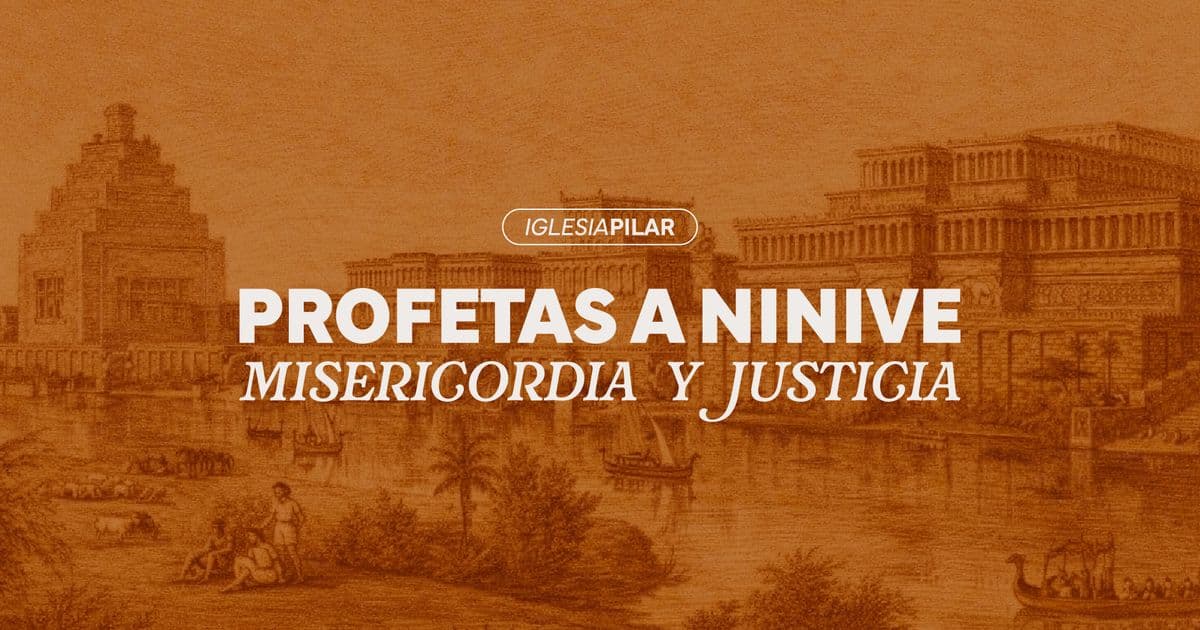
Los asirios se creían invencibles, no solo en el campo de batalla, sino dentro de sus ciudades, palacios y fortalezas. El profeta Nahum compara esos palacios con una guarida de león: un lugar al que nadie osaba entrar. Pero en Nahum 2:11–3:7, con un lenguaje fuerte y afilado, el profeta proclama verdades sin endulzar. La verdad central es que el Señor avergonzará a sus enemigos: destruyendo sus lugares seguros y enjuiciándolos de una manera vergonzosa.
Dios avergüenza a sus enemigos destruyendo sus lugares segurosNahum 2:11-13
Una vez que la ciudad de Nínive está desolada y vacía, Nahum utiliza un lenguaje provocador, casi burlón, haciendo una pregunta retórica cuya respuesta los lectores ya conocen: ¿Dónde quedó la guarida de los leones? Es decir, ¿dónde quedó el palacio del rey?
El león era un animal de gran peso en la cultura asiria. Los relieves descubiertos por los arqueólogos muestran abundantes representaciones de leones, y los reyes acostumbraban cazarlos como símbolo de poder. Pero ahora, el que cazaba leones fue cazado. Nahum utiliza este contraste magistralmente: Asiria salía a cazar sus presas y llevaba el botín a su palacio. El rey, como un león, no tenía por qué cuidarse las espaldas. Él era el cazador, nunca el cazado. Las cuevas que antes llenaba de presas quedarían vacías y abandonadas.
El profeta continúa con una declaración del Señor en el verso 13 que muestra su hostilidad directa contra el enemigo de Judá: "Aquí estoy contra ti." El Dios creador del universo, el Todopoderoso, está contra Nínive. Y si Nínive confiaba en sus ejércitos, el Señor utiliza uno de sus nombres más temibles: Señor de los ejércitos, el comandante en jefe de los ejércitos celestiales, quien tiene poder sobre todo y sobre todas las naciones. Para demostrar que está contra ellos, declara que pulverizará sus carros, sus nobles serán devorados, todo lo saqueado será arrancado y sus mensajeros —aquellos que difundían terror a las naciones— serán aniquilados. El Señor borraría su ejército, su nobleza, sus riquezas y su influencia.
En septiembre de 2014, en el estado de Guerrero, 43 estudiantes fueron desaparecidos cuando se trasladaban a un evento. Años después, las familias siguen sin saber qué sucedió con sus hijos. Pareciera que los culpables están seguros en sus guaridas y que la justicia nunca llegará. El corazón humano clama por justicia, y cuando no la encuentra, cae en desesperanza. Pero el pueblo de Dios no debe caer en desesperanza, porque no hay un lugar seguro para los enemigos de Dios. No hay guarida, no hay palacio, no hay cuarto seguro donde el Señor no vaya a entrar. Él sacará a sus enemigos y los juzgará para siempre.
Dios avergüenza a sus enemigos enjuiciándolos de una manera vergonzosaNahum 3:1-7
Nahum continúa con un "¡Ay de la ciudad sanguinaria!" y empieza a enumerar las razones por las que Dios juzgará severamente a Nínive. Si se entienden estas razones, el juicio severo y la destrucción completa de la ciudad son coherentes.
Ciudad sanguinaria. Las estrategias de guerra de los asirios eran consideradas las más crueles de toda la historia. Las consecuencias por negarse a rendirse a las exigencias del imperio eran atroces. Lo que hacían lo usaban como ejemplo para que otras naciones se sometieran sin resistencia. A diferencia de otras naciones que cometen atrocidades y las esconden, los reyes de Asiria se enorgullecían de ellas porque deseaban propagar el terror.
Ciudad mentirosa. Los asirios aprovechaban el terror para hacer promesas que no tenían intención de cumplir. El mensajero del rey Senaquerib cuando atacó Jerusalén es un ejemplo claro. Les prometía al pueblo de Judá: hagan la paz, coman y beban tranquilos, "hasta que yo venga y los lleve a una tierra como la de ustedes" (2 Reyes 18:31-32). En otras palabras: no pongan resistencia y vayan voluntariamente al exilio. Esas eran las mentiras que utilizaban.
Ciudad avara. Nínive no tenía llenadera. El imperio arrasaba con todo lo que se le ponía enfrente. Robaban, saqueaban y arrebataban todo lo ajeno usando violencia y amenazas. Se llenaron de tesoros que, como se vio en Nahum 2:9, de nada les sirvieron en el gran día del Señor.
Ciudad ramera y hechicera. Los profetas usaban el término "prostitución" para describir cuando el pueblo de Dios ponía su confianza fuera de Él. Pero aquí el profeta lo usa contra Nínive porque vendía su poder militar con el propósito de seducir y luego someter a las naciones bajo su control. Nínive utilizaba sus encantos para engañar a otros a confiar en ella y después despojarlos de sus posesiones. Además, los asirios practicaban la hechicería, buscando ejercer influencia sobre otros y cambiar el curso de los eventos, algo que la Escritura prohíbe.
Dadas estas razones, el profeta muestra cómo Nínive tomaría de su propio chocolate: lo que habían hecho contra otros ahora les sucedería a ellos. Las puertas de la ciudad se llenarían de cadáveres, así como ellos dejaban cadáveres cuando saqueaban otras ciudades. El verso 5 del capítulo 3 trae por segunda ocasión la declaración "Aquí estoy contra ti" del Señor de los ejércitos. El juicio sería vergonzoso: "Levantaré tus faldas sobre tu rostro y mostraré a las naciones tu desnudez y a los reinos tu vergüenza. Echaré sobre ti inmundicias, te haré despreciable y haré de ti un espectáculo" (Nahum 3:5-6).
Nínive quedaría vacía y nadie buscaría regresar a ella. Sus ruinas siguen siendo ruinas. Y cuando fue asolada, sus supuestos aliados se esfumaron. Nadie lloró por ella. No había consoladores disponibles. Avergonzada, vergüenza de vergüenzas.
Apocalipsis 18 habla de una gran ciudad, Babilonia, que atrapó a muchos con sus sensualidades y fue sanguinaria con el pueblo de Dios. No habrá ciudad ni gobierno que escape del juicio de Dios. Todo acto, conocido o desconocido, recibirá el trato justo del Señor de los ejércitos. Apocalipsis 19 registra la respuesta del pueblo de Dios ante ese juicio: "¡Aleluya! La salvación y la gloria y el poder pertenecen a nuestro Dios, porque sus juicios son verdaderos y justos, porque ha juzgado a la gran ramera que corrompía la tierra con su inmoralidad, y ha vengado la sangre de sus siervos en ella" (Apocalipsis 19:1-2). Y después, una gran multitud como el estruendo de muchas aguas y fuertes truenos dice: "¡Aleluya, porque el Señor nuestro Dios Todopoderoso reina! Regocijémonos, alegrémonos y démosle a Él la gloria, porque las bodas del Cordero han llegado."
Así como el pueblo de Judá podía gozarse y alegrarse al recibir esta profecía, quienes confían en Cristo pueden regocijarse sabiendo que los juicios justos y verdaderos de Dios llegarán.
Conclusión
Los enemigos del Señor serán juzgados. Sus guaridas serán destruidas. No habrá uno solo que se le escape. Todo enemigo —Satanás, el pecado, la muerte, este mundo que se pone en contra del pueblo de Dios— será juzgado y avergonzado para siempre.
Si Jesús no dirige una vida y su palabra no tiene relevancia, el Señor juzgará todo pecado y toda transgresión. Es fácil ver los pecados de Nínive y pensar "yo no soy así de pecador." Pero todo aquel que ha pecado y no se ha arrepentido es enemigo del Señor. Pablo escribe que "Dios juzgará los secretos de los hombres mediante Jesucristo" (Romanos 2:16). No hay lugar seguro ni pretexto para el rebelde en el día del Señor. Solo en Cristo hay un lugar seguro. Solo aquellos que se han arrepentido y han puesto su confianza en Él tendrán refugio en el día del juicio.
Presidentes, dictadores, pueden creer que tienen sus cuartos seguros, sus recursos y aliados. Pero nada puede proteger a los enemigos del Señor. Dios los encontrará donde estén y los enjuiciará vergonzosamente. Y nadie llorará por ellos. Todo lo contrario: el pueblo del Señor se regocijará, se alegrará y le dará a Dios la gloria. Nahum nos recuerda que Dios enjuiciará a sus enemigos, avergonzándolos en su juicio eterno. Y como pueblo de Dios, es posible descansar en este Dios santo, temible, que tiene el poder para hacerlo.
Transcripción completa
No Safe Place for God's Enemies
"The Lord will put His enemies to shame" Recently, a national leader arrogantly dared another nation to come after him, because he knew where they lived. His residence reportedly housed an impenetrable safe room, and this resource emboldened him to make such declarations. It was not long before that same leader was taken from his home, shown in chains walking toward his new home: a prison in foreign territory. National leaders can feel invincible and untouchable, only to end up publicly shamed. The Assyrians believed themselves invincible — not only on the battlefield, but within their cities, palaces, and fortresses. The prophet Nahum compares those secure palaces to a lion's den: a place no one dared enter. But in Nahum 2:11–3:7, with sharp and unflinching language, the prophet proclaims unvarnished truths. The central truth is that the Lord will put His enemies to shame: by destroying their safe places and by judging them in a disgraceful manner. God Shames His Enemies by Destroying Their Safe Places (Nahum 2:11-13) Once the city of Nineveh is left desolate and empty, Nahum uses provocative, almost mocking language, posing a rhetorical question whose answer his readers already know: Where is the lions' den? In other words, where is the king's palace? The lion held significant weight in Assyrian culture. The reliefs uncovered by archaeologists display many lions, and kings made a practice of hunting them as a symbol of power. But now, the one who hunted lions was himself hunted. Nahum uses this contrast masterfully: Assyria went out to hunt its prey and brought the spoil back to its palace. The king, like a lion, had no reason to watch his back. He was the hunter, never the hunted. The dens he once filled with prey would be left empty and abandoned. The prophet continues with a declaration from the Lord in verse 13 that reveals His direct hostility against Judah's enemy: "I am against you." The God who created the universe, the Almighty, stands against Nineveh. And if Nineveh trusted in its armies, the Lord invokes one of His most fearsome names: Lord of hosts — the commander-in-chief of the heavenly armies, the One who holds power over everything and every nation. To prove He is against them, He declares He will destroy their chariots, their nobles will be devoured, all they have plundered will be torn away, and their messengers — those who spread terror among the nations — will be annihilated. The Lord would erase their army, their nobility, their wealth, and their influence. In September 2014, in the state of Guerrero, Mexico, 43 students disappeared while traveling to an event. Years later, their families still do not know what happened to their children. It seems as though the guilty ones are safe in their hideouts and that justice will never arrive. The human heart cries out for justice, and when it cannot find it, it falls into despair. But God's people must never fall into despair, because there is no safe place for God's enemies. There is no den, no palace, no safe room where the Lord cannot enter. He will pull out His enemies and judge them forever. God Shames His Enemies by Judging Them in a Disgraceful Manner (Nahum 3:1-7) Nahum continues with a "Woe to the city of blood!" and begins listing the reasons God will judge Nineveh severely. Once these reasons are understood, the severe judgment and complete destruction of the city are entirely coherent. A bloodthirsty city. The Assyrians' war strategies were considered the cruelest in all of history. The consequences for refusing to submit to the empire's demands were atrocious. They used their deeds as examples so that other nations would not resist. Unlike other nations that commit atrocities and hide them, the kings of Assyria boasted of theirs because they wanted to spread terror. A lying city. The Assyrians exploited this terror to make promises they had no intention of keeping. The envoy of King Sennacherib during the siege of Jerusalem is a clear example. He promised the people of Judah: make peace, eat and drink in tranquility, "until I come and take you away to a land like your own" (2 Kings 18:31-32). In other words: do not resist and go willingly into exile. These were the lies they used. A greedy city. Nineveh was insatiable. The empire plundered everything in its path. They robbed, looted, and seized everything by violence and threats. They amassed treasures that, as seen in Nahum 2:9, proved utterly useless on the great day of the Lord. A city of prostitution and sorcery. The prophets used the term "prostitution" to describe when God's people placed their trust outside of Him. But here the prophet uses it against Nineveh because the city sold its military power to seduce and then subjugate nations under its control. Nineveh used its charms to deceive others into trusting it and then stripped them of their possessions. Furthermore, the Assyrians practiced sorcery, seeking to influence others and alter the course of events — something Scripture expressly forbids. Given these reasons, the prophet shows how Nineveh would get a taste of its own medicine: what they had done to others would now be done to them. The city gates would be filled with corpses, just as they left corpses when they sacked other cities. Verse 5 of chapter 3 brings a second declaration from the Lord of hosts: "I am against you." The judgment would be disgraceful: "I will lift your skirts over your face and show the nations your nakedness and the kingdoms your shame. I will throw filth at you, make you vile, and make you a spectacle" (Nahum 3:5-6). Nineveh would be left empty, and no one would seek to return. Its ruins remain ruins to this day. And when it was laid waste, its supposed allies vanished. No one wept for it. No comforters could be found. Shamed — shame upon shame. Revelation 18 speaks of a great city, Babylon, which ensnared many with its sensuality and was bloodthirsty toward God's people. No city or government will escape God's judgment. Every act, known or unknown, will receive the just treatment of the Lord of hosts. Revelation 19 records the response of God's people to that judgment: "Hallelujah! Salvation and glory and power belong to our God, because His judgments are true and righteous, because He has judged the great prostitute who was corrupting the earth with her immorality, and He has avenged the blood of His servants on her" (Revelation 19:1-2). And afterward, a great multitude like the roar of many waters and mighty thunder declares: "Hallelujah! For the Lord our God, the Almighty, reigns. Let us rejoice and be glad and give Him the glory, for the marriage of the Lamb has come." Just as the people of Judah could rejoice upon receiving this prophecy, those who trust in Christ can rejoice knowing that God's just and true judgments will come. Conclusion The Lord's enemies will be judged. Their dens will be destroyed. Not a single one will escape. Every enemy — Satan, sin, death, this world that stands against God's people — will be judged and put to shame forever. If Jesus does not direct a life and His word holds no relevance, the Lord will judge every sin and every transgression. It is easy to look at Nineveh's sins and think "I'm not that bad." But everyone who has sinned and has not repented is an enemy of the Lord. Paul writes that "God will judge the secrets of men through Christ Jesus" (Romans 2:16). There is no safe place and no excuse for the rebel on the day of the Lord. Only in Christ is there a safe place. Only those who have repented and placed their trust in Him will have refuge on the day of judgment. Presidents, dictators, may believe they have their safe rooms, their resources and allies. But nothing can protect the enemies of the Lord. God will find them wherever they are and judge them disgracefully. And no one will weep for them. Quite the opposite: the Lord's people will rejoice, be glad, and give God the glory. Nahum reminds us that God will judge His enemies, putting them to shame in His eternal judgment. And as God's people, it is possible to rest in this holy, fearsome God who has the power to do it.